
Hyde Park City Directory Holdings
The confirmed starting point is the Dutchess County Historical Society Book and Research Locator. Its catalog exposes bookcase, shelf, title, author-publisher, date, library number, type, subject, location, and tags. That is useful before a room visit because the names on the spines are not all Hyde Park titles. The directory collection includes Poughkeepsie volumes that may contain regional entries, Dutchess County directories that can offer a broader name and address trail, and a later telephone run. Check whether the catalog record actually indexes Hyde Park pages before treating a volume as town-wide coverage.
| Collection | Years | Where Held | Access |
|---|---|---|---|
| Vail Poughkeepsie City Directory | 1871-72 through 1881-82; 1890-91 | DCHS locator | In-library research; verify Hyde Park pages |
| R.V. LeRay Poughkeepsie Directory | 1881-82, 1890-91, 1897 copies | DCHS | Catalog or reading-room request |
| LeRay, NOS, and Howland Dutchess directories | 1893-96 and 1895-96 | DCHS | Compare publisher coverage and entries |
| Lippman's Dutchess County Directory | 1901-05 | DCHS | Historical county directory |
| Poughkeepsie, Hyde Park, and Pleasant Valley telephone directories | 1950-51 | DCHS locator | Confirm volume scope and indexing |
No official source located a complete Hyde Park-only printed run, a dated reverse-directory shelf, or a digitized local page for a line-by-line transcription. That gap matters. A Poughkeepsie title can carry Hyde Park entries, while a telephone book may supply only a phone and address clue. The catalog, the physical volume, and its front matter remain the evidence for scope.
Hyde Park Directory Research Rooms
DCHS was founded in 1914 and preserves photographs, manuscripts, maps, and rare documents alongside its printed reference material. The Society describes its archive as about 4,000 linear feet and accepts research requests when a catalog search does not settle the question. The Genealogy Room and Local History Room are on the first floor of Adriance Memorial Library, 93 Market Street, Poughkeepsie. The Genealogy Room is open during library hours; the Local History Room is by appointment. Ask for both when a directory finding points toward a map, building, manuscript, or newspaper item.
The DCHS tools page routes researchers to the book locator and other county resources. It is the more secure route for an old directory than assuming a commercial database contains a Hyde Park scan. The local-resources page also distinguishes the Genealogy Room from appointment-based local-history access. Keep the catalog title, date, shelf note, and page number in research notes so the same entry can be checked again.
The DCHS directory locator shows the research interface used to identify county directories, telephone books, local histories, obituaries, and vital-record publications before requesting a volume.
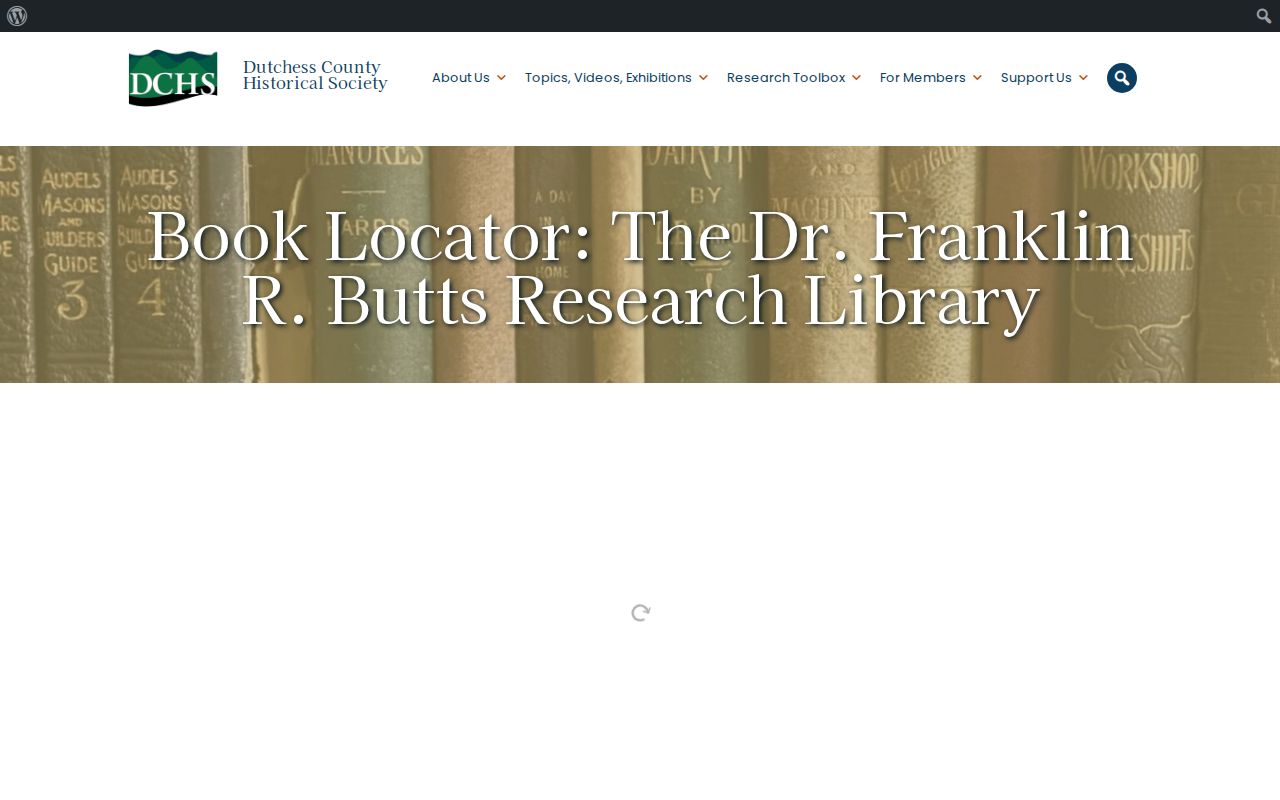
Those catalog fields help separate a dated shelf item from a searchable, online record. They also make it easier to ask staff for one specific volume rather than a broad name search.
Note: A catalog hit identifies a source to inspect; it does not establish that every Hyde Park household was printed in that source.
Hyde Park Directory Years
The Vail Poughkeepsie run is listed for 1871-72, 1872-73, 1873-74, 1874-75, 1875-76, 1876-77, 1878-79, 1880-81, 1881-82, and 1890-91. R.V. LeRay copies are listed for 1881-82 and 1890-91, with 1897 copies also noted. For Dutchess-wide work, LeRay is listed for 1893-96; NOS and Howland each appear for 1895-96; and Lippman's continues from 1901-05. The year range describes the known holding, not a promise that every individual town or hamlet appears on every page.
Publisher changes can create a useful second look. A name missed in one volume may appear under another compiler's collection method, but the printed form must be preserved. Search Hyde Park, Hyde Park Center, Staatsburg, and historic Staatsburgh spellings when the question involves a hamlet. Old records can also use Albany Post Road, Market Street, Crum Elbow, a precinct, or a landmark rather than a current municipal description.
| 1871-91 | Vail Poughkeepsie volumes provide a regional directory starting point. |
|---|---|
| 1893-96 | LeRay Dutchess County volumes broaden the search beyond the city title. |
| 1895-96 | NOS and Howland volumes allow a publisher-to-publisher comparison. |
| 1901-05 | Lippman's provides a later county-directory interval. |
| 1950-51 | The telephone collection can add an address or phone clue, but not a complete population list. |
Reading a Hyde Park City Directory
A directory entry should be read as a compact, dated statement. The Library of Congress notes that directories are commonly alphabetical by surname and may also include address or telephone arrangements. A local entry can give a surname and given name, a spouse or widow notation, occupation, employer or business, street address, telephone number, and an owner, renter, or boarding mark when that publisher used one. Copy initials, punctuation, and abbreviations exactly before expanding them. The catalog did not expose a digitized Hyde Park page or an abbreviation key, so no local symbol should be guessed.
| Printed name | Record surname, given name, initials, and any spouse or widow notation as printed. |
|---|---|
| Occupation or employer | Useful for separating people with the same name, but tied to that publication year. |
| Street address | May be a residence, office, boarding address, or another listed location. |
| Owner or renter mark | Use it only when the volume's abbreviation key explains the publisher's notation. |
| Page and title | Keep the publisher, year, page, and scan or shelf location with the transcription. |
- Criss-cross directory
- An address-order section that can connect a street number to a listed occupant when the volume contains one.
- Householder index
- A name arrangement focused on household heads, which may omit other people at the address.
- Abbreviation key
- The volume's own explanation of marks such as widow, residence, boarding, or ownership notation; inspect it before interpreting a line.
A city directory listing is historical evidence, not a current address assertion. When a later record must be checked against a specific person, use the separate Hyde Park resident lookup workflow rather than treating a dated directory line as present proof.
Hyde Park Directory Library Story
The Hyde Park Library history helps explain why local clues may be distributed across more than one institution. Its collection began in 1895 after James Roosevelt gave Hyde Park Union Free School 75 books. It moved to St. James Chapel in 1900 with about 700 items, reached the Dutch-stone building in 1927, was purchased by the town in 1947, expanded in 1981, and gained an adjacent 1835 house as an annex in 2002. Those moves are a practical reason to ask the library and DCHS separately about local papers and family material.
The library history record documents the local institution behind that timeline, including the 1927 building and later expansion.
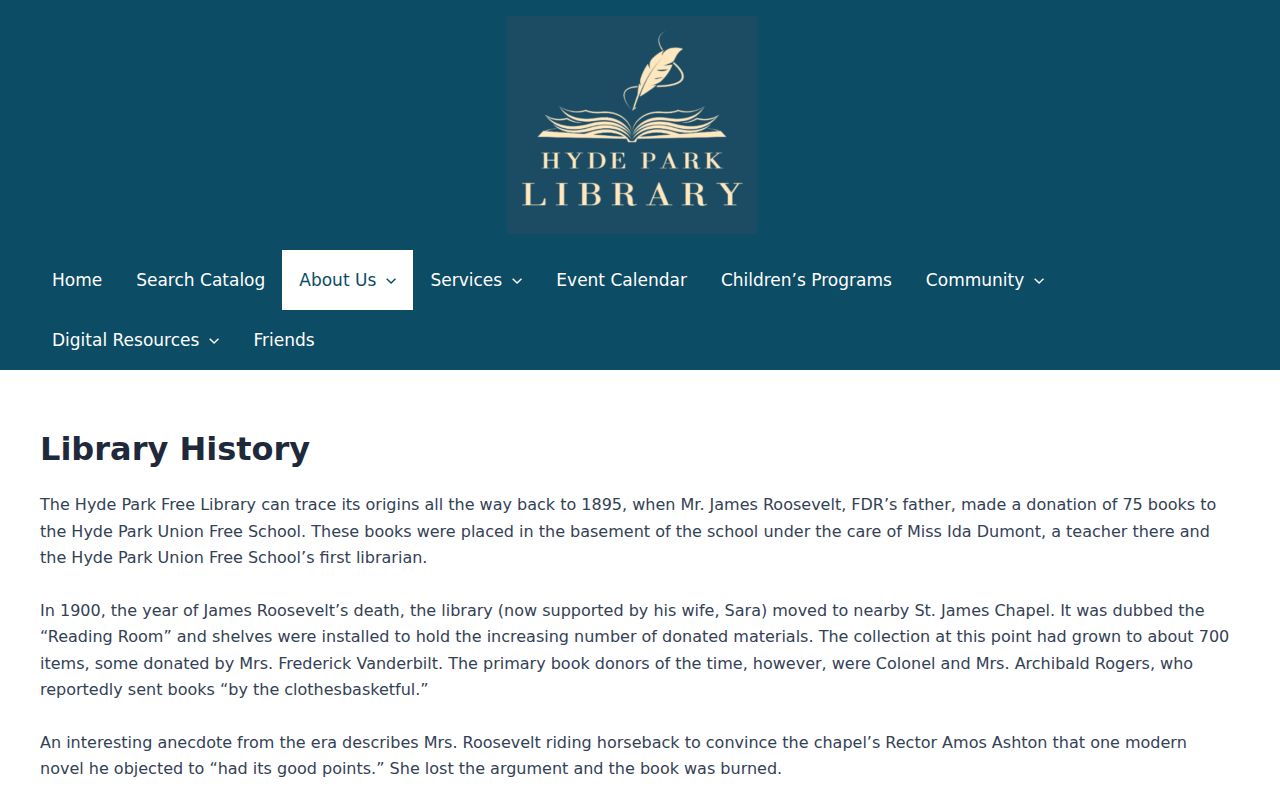
The official material does not confirm a Hyde Park Library subscription list, a yearbook archive, or exact directory shelf years. Ask the library before relying on any database or local collection that the catalog does not name.
Trace a Hyde Park City Directory Household
Start with the oldest likely volume for a surname and locality, then follow the household forward. A directory can be close to annual and rich in occupation or address details, while a census is periodic and stronger for household composition, age, birthplace, and relationships. New York State census collections exist for 1855, 1865, 1875, 1892, 1905, 1915, and 1925, although coverage varies and some 1865 schedules are missing. Compare the original image when an index and a printed directory disagree.
- Search surname and given-name variants in the oldest DCHS directory likely to include the hamlet, and note the title, year, and page.
- Write down the exact address, occupation, spouse or widow notation, and every abbreviation before moving to another volume.
- Repeat in nearby years, allowing for gaps, changing publishers, marriage-name changes, boarding, and shortened first names.
- Where a street-order section exists, search the address too, then pair the dated entry with federal or New York State census material.
- Use DCHS obituary, church, marriage-notice, or probate publications as a later historical check when the trail ends.
The 1865 New York State Census collection offers name, age, birthplace, occupation, and household fields, but it is not complete. DCHS also lists the Reformed Dutch Church, Hyde Park record for 1810-1899, Dutchess probate publications for 1752-1865, and obituary and marriage-notice resources. Each can help explain a move, marriage, death, or family connection without turning a missing directory listing into a conclusion.
Hyde Park Directory Name Clues
Directory research changes when a place name changes. The settlement appears in older material as Stoutenburgh or Staatsburgh before the Hyde Park post-office name took hold in 1812; Hyde Park became a separate town after leaving Clinton in 1821. A deed, church record, or directory can therefore use a hamlet, road, precinct, or landmark instead of the modern town name. Use those terms as search keys, not as proof that a person lived in every place associated with the term.
The 1928 DCHS publication Records of the Town of Hyde Park, Dutchess County, New York, edited by Franklin D. Roosevelt, adds town names, minutes, and historical context. Records of Crum Elbow Precinct and DCHS newspaper marriage and death publications widen the older name trail. The county directory of historians lists both a Hyde Park municipal historian and the Hyde Park Historical Society for questions about local terminology and collections.
Dutchess County's municipal-historian directory provides the official contact listing for the Hyde Park historian and historical society.
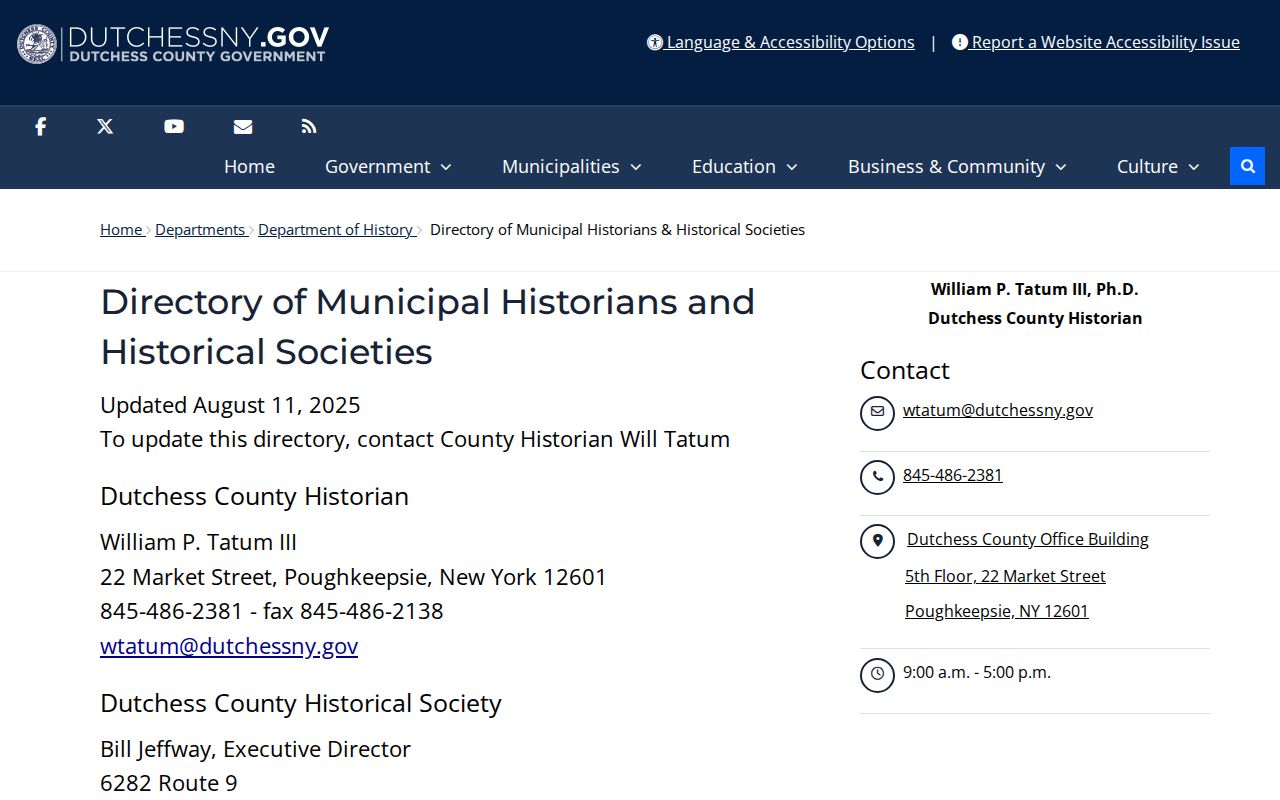
A local historian can point to period vocabulary or a collection route, while the directory page, census image, clerk file, or original volume remains the record to cite.
When a Hyde Park Directory Is Silent
A missing name can mean the compiler skipped the address, used a different name form, covered a neighboring area unevenly, or omitted the person because of the volume's method. Door-to-door collection was irregular. The confirmed catalog does not support a claim that any one directory is a complete Hyde Park roll. Try initials, married or widowed forms, Jr. or Sr., Dutch and English surname variants, Staatsburg and Staatsburgh, and road or route abbreviations. Preserve the spelling in the book even if a later source uses another form.
When the directory shelf is not enough, move through the documented fallback chain: request DCHS research assistance, use the Genealogy Room or appointment-based Local History Room, consult the Hyde Park Library, then compare a census, church record, obituary publication, probate source, or Town Clerk material that fits the date. This approach keeps the historical record honest and avoids converting an incomplete source into a claim about a whole household.
Note: Record the volume consulted and the terms searched, because a negative directory result can be useful when its coverage limits are clear.