
Hyde Park Resident Lookup Records
A careful Hyde Park resident lookup treats each record as one claim. It is never a full biography. Dutchess ParcelAccess links an owner name to a parcel, its location, assessment, deed book and page. The record also gives a primary mailing address. That mailing field can sit far from the land. It is not proof of present residence. The official voter search confirms a registration and polling place. You must supply the required identifying details. Deeds, court indexes, vital genealogy copies, and dated street directory volumes each answer a different question. The answers cover connection, identity, or time. Pick the record that fits the question you are actually asking.
| Record | What It Confirms | Where | Access |
|---|---|---|---|
| Parcel or tax record | Owner, parcel location, assessment, mailing address, and transfer clue | Dutchess ParcelAccess or Hyde Park tax records | Public online fields; assessment dates matter |
| Voter registration | A matching voter registration, poll-site, or mail-ballot status | New York voter lookup | Individual search with required identity fields |
| Recorded deed | Grantor or grantee role, legal interest, and recording date | Dutchess County Clerk Document Search | Index and viewing online; copies have separate charges |
| Court index | Party, case, status, court, and appearance clue | New York eCourts and the Hyde Park clerk | Free index; protected files and categories are excluded |
| Vital genealogy record | A historic birth, death, or marriage event and family detail | NYSDOH and DCHS collections | Eligibility, waiting periods, and custodian rules apply |
Start with the record that fits. A parcel clue helps when someone may own Hyde Park property. A name, birth date, and address support a single voter confirmation. For an older person, an obituary or church register often works. A census entry or dated city directory can serve well as a second source. Record the result date. Note the exact name form, and whether an address is a situs address, a mailing address, or a historical listing. Those labels matter when you compare findings later.
Note: Hyde Park and Dutchess sources often show a recorded connection. They may not show a current household member or a complete resident list.
Matching a Hyde Park Resident
Common names need two independent attributes. Match a full name against a Hyde Park parcel or ZIP, a dated directory occupation, a deed party role with its legal description, or the address and birth date used for voter confirmation. County Clerk searching ignores capitalization, special characters, and spaces. Still, a spelling variant can hide a hit in a street directory or court index. Try initials, middle names, surname-first form, and married or widowed forms. Jr. and Sr. work only as search variations. Keep the printed name exactly as the record shows it.
The sharpest distinction here is between a mapped parcel location and the owner's primary mailing address. ParcelAccess displays both. A mailing address shows where tax mail goes; the parcel location identifies the land itself. Neither field should be retold as proof that a particular person occupies the property. That single check keeps a Hyde Park resident lookup from blending separate kinds of evidence into one unsupported conclusion.
Record-reading tip. Label every address by source type, especially when the ParcelAccess owner mailing address differs from the mapped Hyde Park parcel location.
Hyde Park Voter Lookup Check
The New York voter lookup confirms one person at a time. It asks for a registered voter's last name, first name, birth date, county, and address, with ZIP also on the form. Select Dutchess County. Use the postal ZIP tied to the known address. A match can confirm registration, poll-site, or mail-ballot status. The tool cannot browse a street or build a neighborhood roster.
| Official search | Visible inputs | Requirement | Useful result boundary |
|---|---|---|---|
| New York voter lookup | County; last name; first name; date of birth; ZIP; address | County, name, date of birth, and address are required by the form instructions | Individual registration, poll-site, or mail-ballot confirmation, not a public street list |
| WebCivil Local | Party name; party role; court; case type; filing year; case status; output | Fields are optional filters; Search runs the query | Civil-local party and case clues, subject to court coverage and confidentiality limits |
| NYSED verification | Profession; name or license number | Choose a profession; use at least three last-name letters or a six-digit license number | License identity, status, original date, and available discipline summary |
The official voter form shows the identifying inputs a Hyde Park resident lookup depends on.
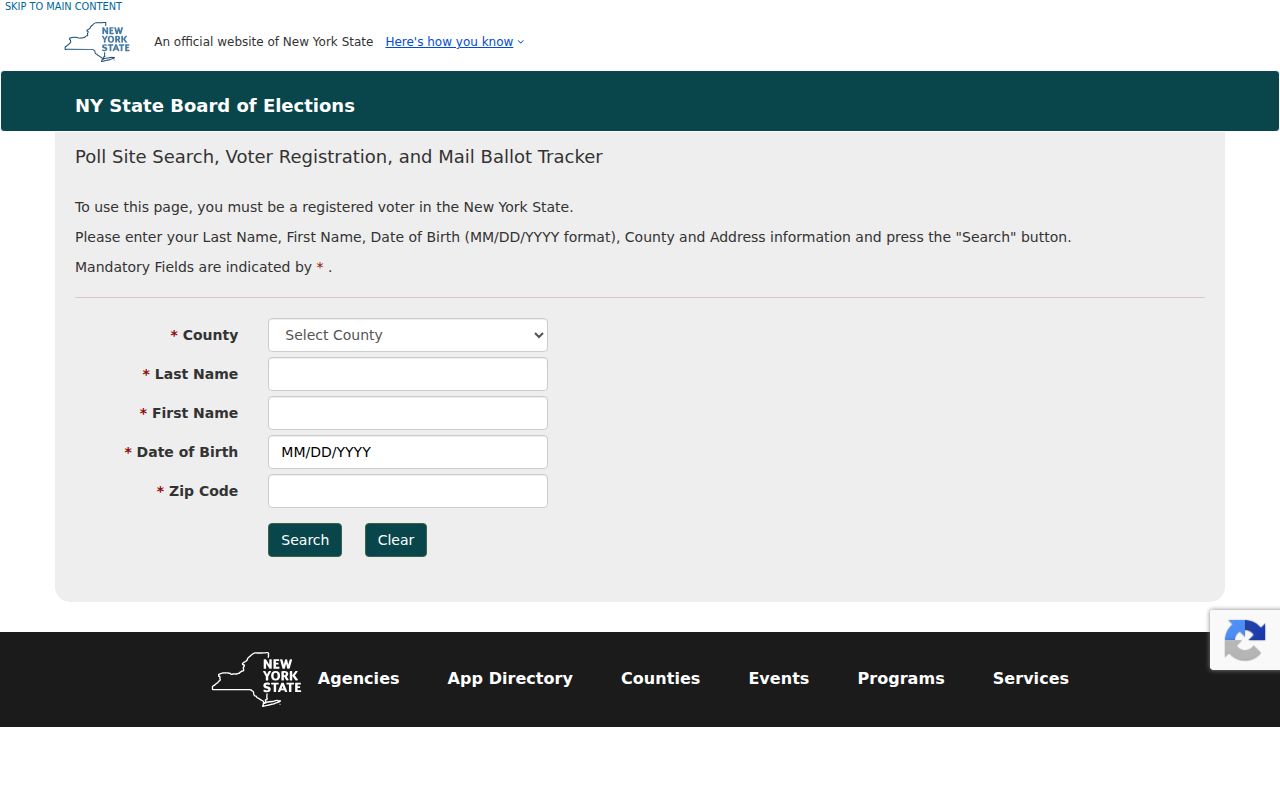
Use the form only to confirm the matching individual. New York Election Law opens registration records to the public under board supervision, while withholding specified identifiers and shielding confidential voter records.
Hyde Park Court Lookup Details
WebCivil Local covers party, index, attorney, and judge routes. It also offers calendar and court-search routes for New York local civil matters. Narrow results with the party-role control, filing year, case type, court filters, and status filter. The Hyde Park Town Court is one local contact point. An online result, though, is not complete proof of identity, disposition, or current address. Compare the party role, name form, and court. Check the filing date, judge, and any appearance details before linking an entry to a Hyde Park resident.
A public docket result may show the case or index number, court, and party names and roles. It may also show case type, filing date, status, judge, and future appearances. It may point to a calendar or file route, but papers are not guaranteed online. Sealed matters and categories such as adoption and youth cases never appear as ordinary results. Family Court material and other restricted records are excluded too. Need a full public file, a correction, or an older record? Contact the court clerk rather than treating a no-hit as the final word.
- Docket: the court’s running record of case activity and filings.
- Index versus image: an index identifies a record; an image is the scanned or filed document itself.
- Certified copy: a custodian-issued copy with official certification when that form is needed.
- Party role: the position a named person has in the case, such as plaintiff or defendant.
Note: A same-name court entry is a lead for verification, not a statement about the person's life, location, or outcome.
Verifying a Hyde Park Resident
Use a short, repeatable sequence when the goal is to confirm one person. Do not try to gather every record in sight. Anchor the name first. Then let the next source test it. The sequence separates owner information, voter confirmation, recorded property interests, and court clues, in that order. It also leaves room for a negative result. That result is often the accurate one. It happens when a person owns no property, uses a different name form, or has a protected record.
- Search ParcelAccess by owner name or Hyde Park address and record the parcel location, owner field, mailing field, and deed book or page.
- Where the identifying details are known, run the New York voter lookup with Dutchess County, the full name, date of birth, ZIP, and address.
- Search the Dutchess County Clerk Document Search by party name, deed type, municipality, and likely years, then compare the legal description and party role.
- Use eCourts only for a case clue, then ask the responsible clerk about an inspectable file or a correction route.
Older Hyde Park research benefits from a dated source alongside the modern records. The Dutchess County Historical Society holds city directories, obituary publications, church registers, and probate references. These materials can anchor a name to a given year. Keep the limits clear. A historical entry places a person at an address in a stated year. But it cannot prove present residence. The historical shelf gets fuller treatment on the Hyde Park city directories page. There the residents directory tradition and its archival cousins are laid out side by side.
Hyde Park Vital Record Routes
Vital records in Hyde Park run through two offices. The Hyde Park Town Clerk serves as local registrar for births and deaths that occurred in town. Events outside New York City but elsewhere in the state go to NYSDOH Vital Records. That office handles both certified copies and genealogy requests. Vital records are not ordinary FOIL records. Certified copies carry eligibility and identification rules. Genealogy access follows its own waiting periods and proof requirements. The local registrar is a sensible first contact for a town event. Confirm the current request process before visiting or mailing anything.
New York's genealogy rules generally open birth records after 75 years when the person is known deceased. Death and marriage records open after 50 years with required proof of death. A direct-line descendant may waive a waiting period by showing the relationship. The DOH-4384 genealogy application is printed and signed. It is mailed with a check or money order, never cash. DCHS church, obituary, and cemetery publications serve as a historical fallback. They are not certified civil records. Treat them as clues rather than proof within any residents directory search.
Hyde Park Public Name Clues
Professional and state records can add a narrow identity clue. This works when they match a person's known history. NYSED's Office of the Professions verification search works one profession at a time. It can return license identity, profession, location, original license date, registration status, and discipline summaries. Those discipline summaries go back to 1994. A license location is a professional record location, not a residence. Use it to tell apart people who share a name. Then confirm the distinction with a separate source. The NYSED verification screen displays the profession selector and the name-or-license-number route. That works as a limited Hyde Park resident lookup clue rather than a street directory entry.
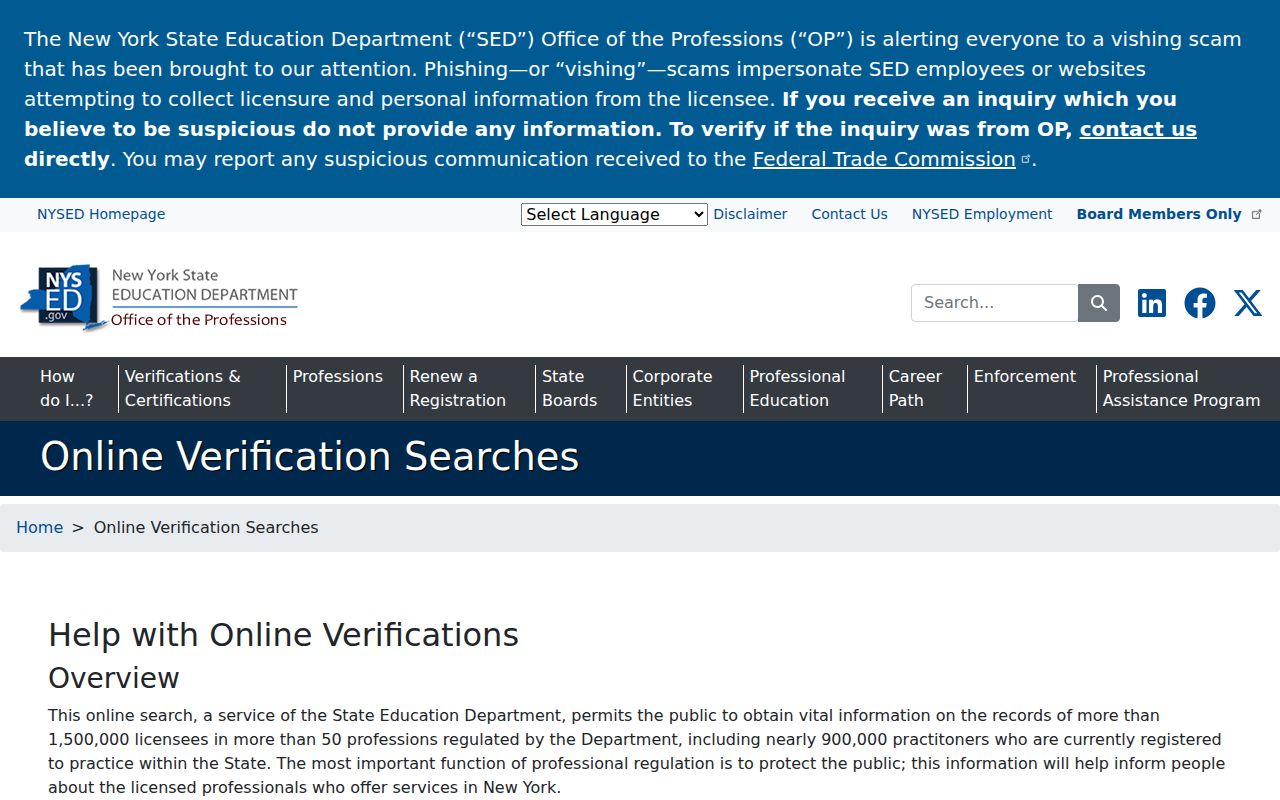
That screen shows only the limited professional data the state publishes. It works best for name disambiguation, not as an address claim. When an exact name is uncertain, the state's unclaimed funds search permits last-name searching refined by city, ZIP, prior name, or prior address. A search hit is only a possible association. Claiming property still requires the separate proof process. The official unclaimed-funds search is free and shows the name-based refinement route plainly.
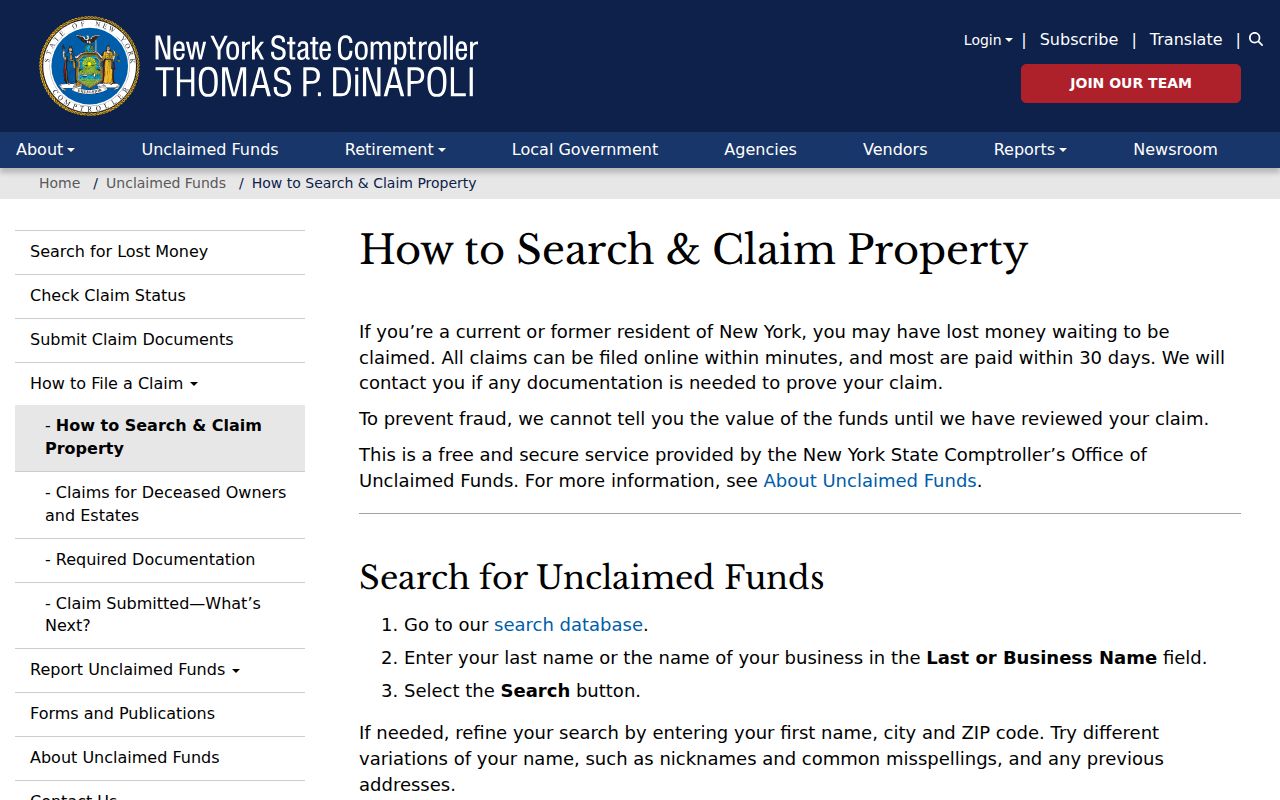
These tools help separate similar names in a Hyde Park residents directory search. Neither a license result nor an unclaimed-property result proves a home address in town.
Hyde Park Lookup Limits
The New York Freedom of Information Law is Public Officers Law Article 6. It does not open every personal record. Vital-record eligibility, court confidentiality, and voter-file restrictions all remain in force. Federal limits on DMV information remain in force. New York's Address Confidentiality Program shields qualifying participants through a substitute address and forwarding route. Confidential voter registration under Election Law §5-508 is closed to public inspection and copying. Never use a voter lookup result to infer a protected address.
When a Hyde Park record is wrong, contact the custodian that created it. Parcel corrections belong with the assessor or county real-property office, voter corrections with Dutchess Elections, and court errors with the court that entered the data. Deed-index questions belong with the County Clerk. The New York Address Confidentiality Program is the right safety route for residents. Their address exposure creates risk. A narrow FOIL request can seek segregable non-exempt town material. It cannot override a statutory confidentiality program. The residents directory trail ends where the law draws that line.
Lawful use. Use Hyde Park resident lookup records only for lawful personal, family-history, civic, safety, or records purposes. Never use a record to stalk, harass, intimidate, or expose a protected person.